16 Oct 2025
7 Useful Tips for Buying a Laser Welding Machine | Laser Welder Buying Guide
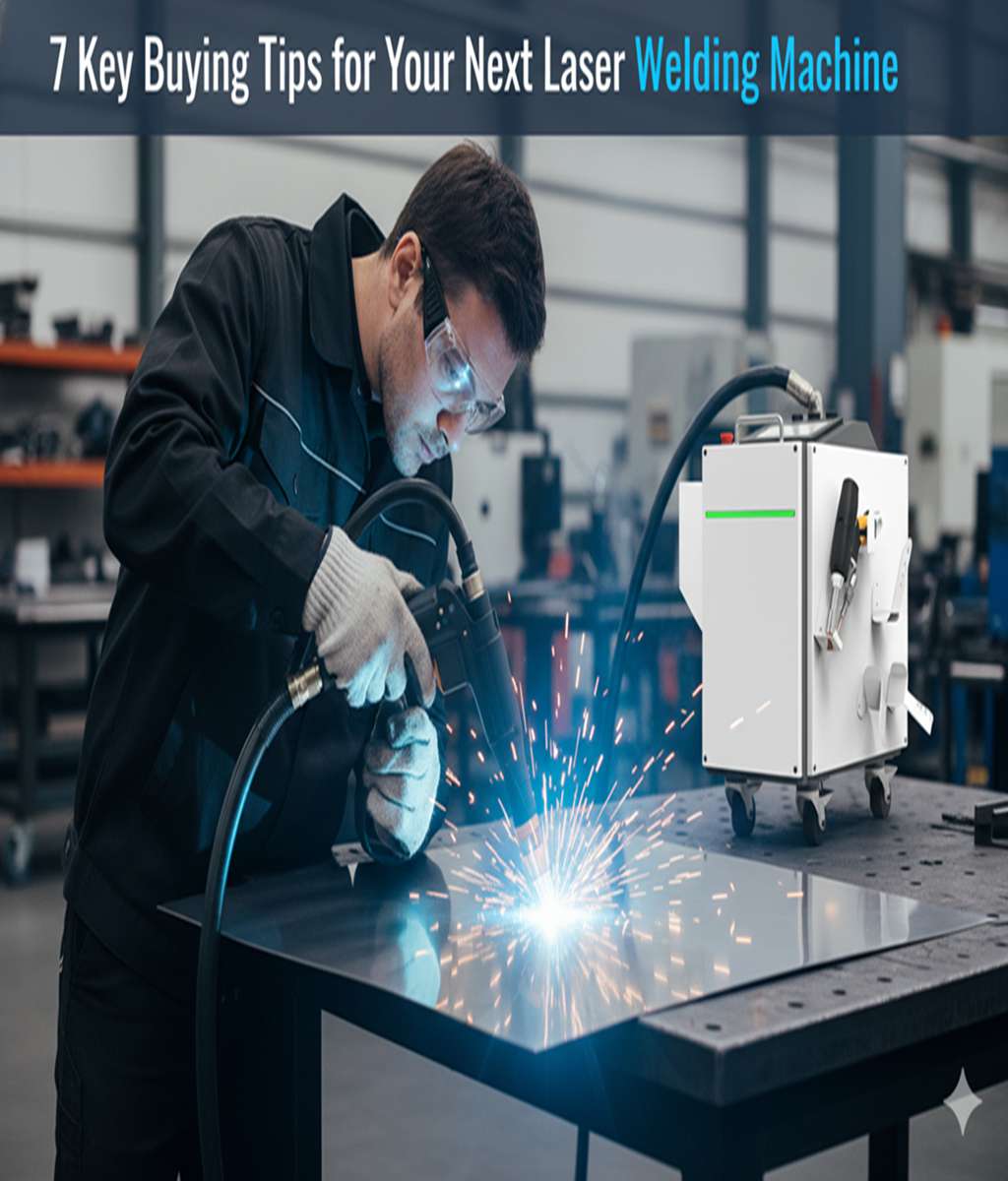
7 Useful Tips for Buying a Laser Welding Machine
If you’re planning to invest in a laser welding machine, it’s important to make an informed decision. With so many brands, power levels, and features available, knowing what to look for can help you choose the right equipment for your production needs.
Here are seven practical tips to guide you through the selection process — whether you’re a first-time buyer or upgrading your current welding system.
1. Identify Your Welding Requirements
Start by defining what materials you will weld and their thickness. These two factors determine the required laser power and machine configuration.
Material Type: Stainless steel and carbon steel usually require 1000W–1500W of laser power.
High-Reflective Materials: Aluminum, copper, and brass may need 1500W or higher to achieve clean, stable welds.
Welding Application: Consider whether you’ll perform continuous production, fine repair, or complex joint welding.
A clear understanding of your needs ensures you don’t overpay for unnecessary power or features.
2. Consider Laser Power and Overall Performance
Laser power directly affects both welding speed and penetration depth. The thicker the material, the higher the power required for a smooth weld.
When comparing machines, pay attention to:
Welding Precision: High-accuracy optics and motion systems ensure consistent quality.
Machine Stability: Stable power delivery prevents welding defects.
Portability: Especially important for handheld laser welders used in flexible production setups.
A machine that balances performance, stability, and mobility gives you greater long-term value.
3. Select the Right Laser Type
Choosing the correct laser source is critical for efficiency and material compatibility.
Fiber Lasers: Best for stainless steel, aluminum, copper, and titanium — offering high energy efficiency and minimal maintenance.
CO₂ Lasers: Suitable for thicker metals and non-metallic materials such as plastics or ceramics.
Pulsed Lasers: Ideal for thin sheets and delicate parts.
Continuous Wave (CW) Lasers: Handle thicker materials and long weld seams efficiently.
4. Look for Essential Features
A good laser welding machine should combine safety, usability, and durability. Key features to look for include:
Efficient Cooling System: Air-cooled for portability or water-cooled for heavy-duty, continuous use.
User-Friendly Interface: Real-time monitoring, programmable settings, and safety features like shields and emergency stops.
Ergonomic Design: Lightweight, handheld models reduce operator fatigue.
5. Evaluate Accessories and Consumables
Accessories and consumables play a major role in day-to-day efficiency. Before buying, check for:
Availability of spare parts such as nozzles, lenses, wire feeders, and gas hoses.
Ease of maintenance and compatibility with optional accessories.
Accessory kits that improve setup and workflow efficiency.
6. Compare Brands, Pricing, and Technical Support
Not all laser welding machines are created equal. Reputable brands typically offer:
Higher build quality and consistent laser performance.
Comprehensive training, documentation, and after-sales service.
Longer warranty coverage and quick replacement parts.
Always balance price with reliability and service. A slightly higher initial investment can save you money in maintenance and downtime later.
7. Verify Additional Considerations
Minimal Heat-Affected Zone (HAZ): Ensures clean, precise welds without deformation.
Software Interface: Simple parameter control improves repeatability.
Warranty and Maintenance: Confirm coverage and service availability for long-term assurance.
Conclusion: Invest Smart for Long-Term Performance
By following these tips, you’ll be better equipped to choose a laser welding machine that fits your specific needs — offering reliable performance, easy operation, and long service life.
At our company, we provide a full range of fiber laser welding machines, handheld welders, and automated laser systems tailored to your applications.
🚀 Looking for the best laser welding solution for your factory?
Contact our sales team today for a free consultation and personalized quotation.