
01 Apr 2026
Beginner’s Guide to Using a Laser Welding Machine
A laser welding machine is one of the most advanced tools in modern metal fabrication. Known for its high precision, speed, and ease of use, it is suitable for both beginners and experienced operators.
This guide walks you through everything—from preparation to troubleshooting—so you can start welding efficiently and safely.
1. Pre-Operation Checks (Don’t Skip This)
Before turning on the machine, always perform a quick inspection. This step prevents the most common problems.
Ensure the power supply is stable and properly connected
Check the water cooling system (if applicable) is circulating normally
Confirm the gas supply system is ready and leak-free
Clean the machine surface to avoid dust contamination
Safety First
Wear laser safety goggles at all times
Make sure the emergency stop button is released
Prepare inert shielding gas (argon is recommended)
Test Run
Always perform a trial weld on scrap material:
Adjust parameters gradually
Avoid burn-through or weak welds
Observe bead formation before real work
2. Parameter Settings (This Determines Your Results)
Correct settings are the key to clean, strong welds.
Basic Setup
Select material type (e.g., stainless steel, aluminum)
Input material thickness
Adjust:
Power
Pulse width
Wobble (oscillation) mode
Recommended Working Range
Focal distance: 5–20 mm
Nozzle distance: keep within ±1 mm
Argon gas flow: 18–22 L/min (high purity)
Workpiece Preparation
Remove rust, oil, and coatings before welding
Use clamps if the gap exceeds 0.1 mm
Ensure tight joint fit-up for best results
3. Welding Techniques (Where Skill Meets Precision)
Basic Operation
Move the welding head smoothly along the seam
Maintain a 0.5–2 mm distance from the workpiece
Use the red guide laser for alignment
For Thicker Materials (>2 mm)
Enable oscillation (wobble) mode
This increases weld width and penetration
Reduce power if you see excessive spatter
Positioning Tip
Start with spot welding (tack welds)
Then proceed with full welding
This prevents deformation and misalignment
4. Common Problems & Solutions
Weak Weld
Causes:
Dirty surface
Low power or insufficient gas
Solutions:
Clean the material thoroughly
Increase power or gas flow
Insufficient Penetration
Causes:
Incorrect focus
Low oscillation frequency
Solutions:
Adjust focal position
Set oscillation frequency to 10–40 Hz
Optimize wire feed speed (if using filler wire)
Machine Overheating
Causes:
Continuous long operation
Poor cooling
Solutions:
Reduce duty cycle
Allow cooling breaks (1–5 minutes)
5. Pro Tips for Better Results
Keep your hand steady—consistency is everything
Start with lower power, then increase gradually
Always monitor the molten pool shape
Maintain proper gas shielding angle and flow
Regularly clean the nozzle and lens
6. Real-World Operation Insight
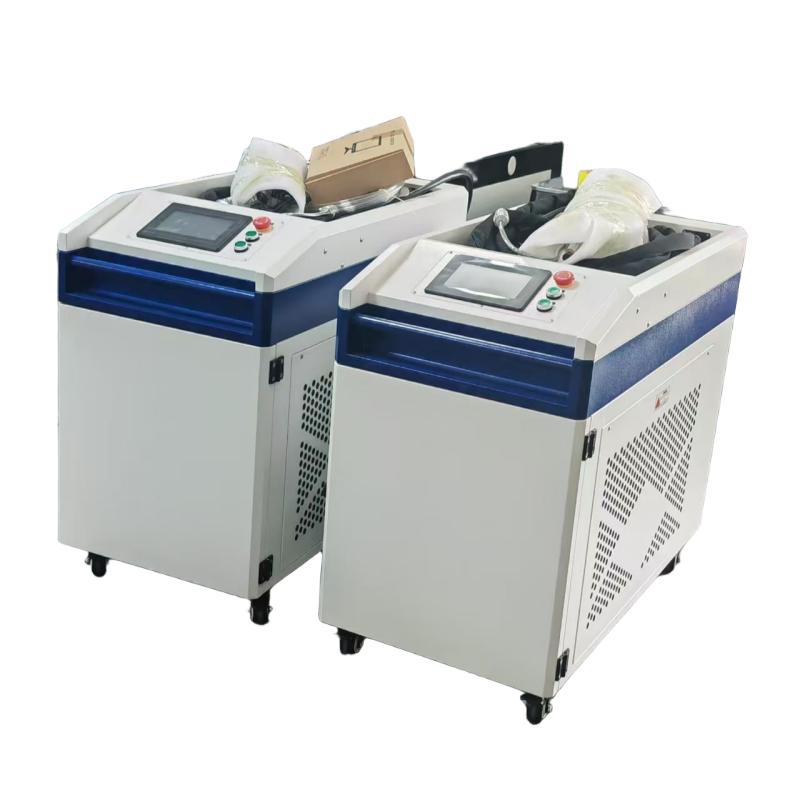
During operation, a handheld laser welder emits a bright, concentrated beam that instantly melts the metal at the joint. The molten pool forms and solidifies rapidly, creating a clean, narrow, and strong weld seam with minimal distortion.
 7. Why Laser Welding is Ideal for Beginners
Compared to traditional welding methods (TIG/MIG), laser welding offers:
Easier learning curve
Minimal heat-affected zone
Cleaner weld appearance
Faster processing speed
Lower post-processing requirements
8. Final Thoughts
Mastering a laser welding machine doesn’t take years—it takes proper setup, technique, and practice.
Start with basic materials, follow the guidelines above, and you’ll quickly achieve professional-quality welds.