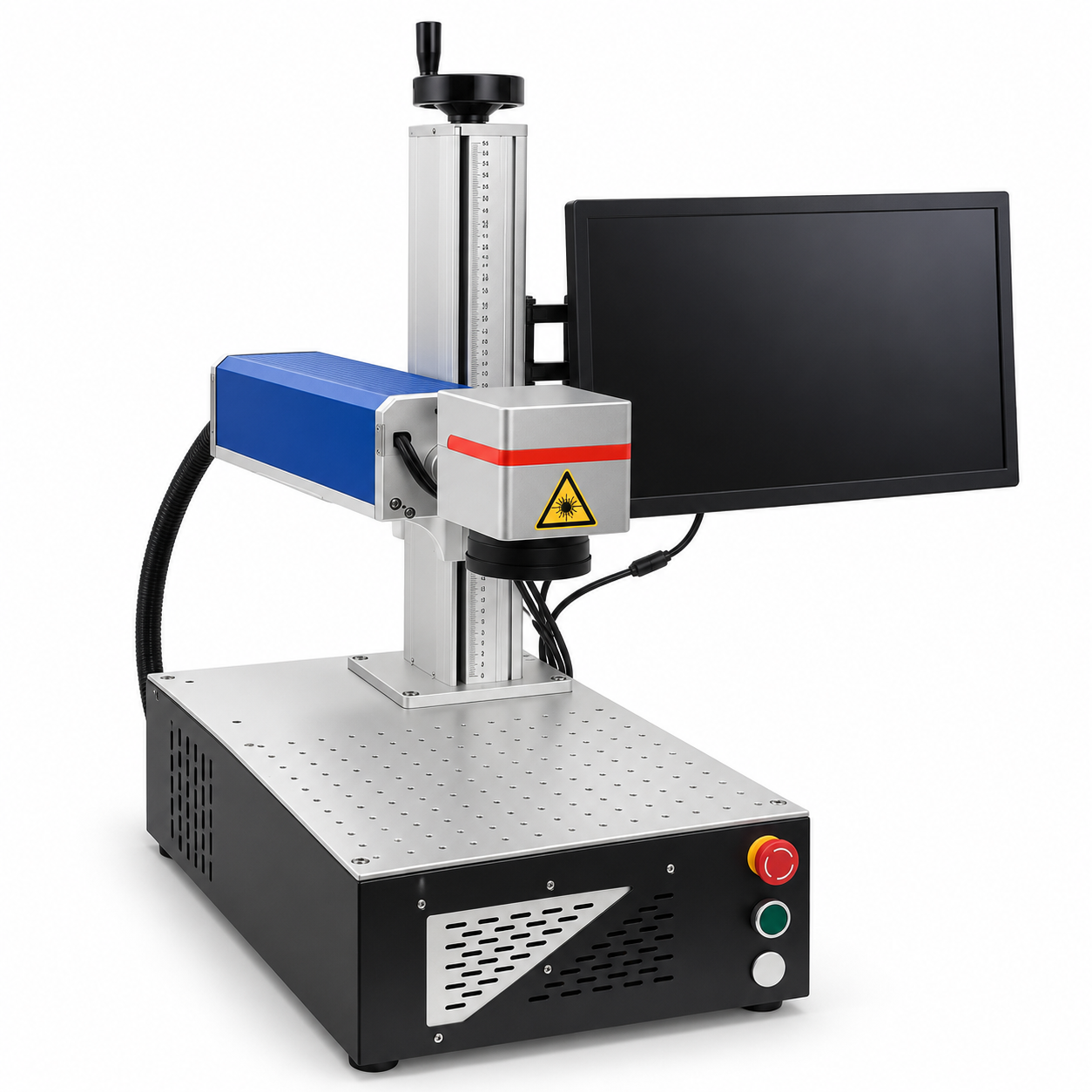
Fiber Laser Marking Machine
A common solution for marking stainless steel, carbon steel, aluminum and other suitable metals. Selected plastics may also be marked depending on composition and additives.
Metal MarkingQR CodesSerial Numbers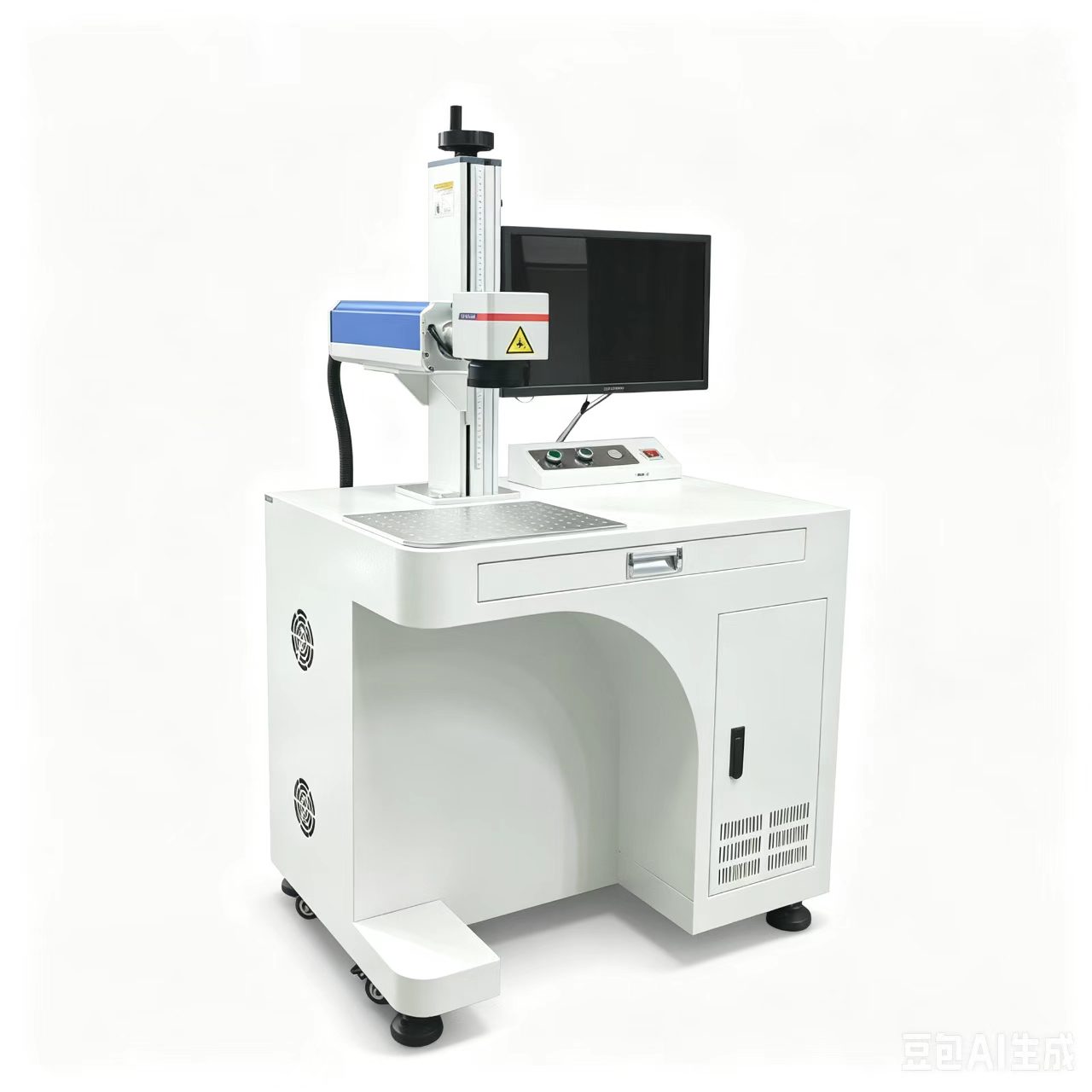
Discover fiber, UV and CO2 laser marking solutions for serial numbers, QR codes, logos, product identification and industrial traceability. Jinli Laser helps manufacturers select suitable marking technology for their materials and production requirements.
Laser marking uses focused laser energy to create text, codes, graphics and other marks on suitable surfaces. The best laser type depends on the material, surface finish, marking contrast, required depth and production speed.
Fiber laser marking for many metals and selected plastics
UV laser marking for selected plastics and fine-detail applications
CO2 laser marking for many organic and non-metallic materials
Options for workstations, rotary marking and automation integration
Application testing to confirm mark quality and process settings
Serial numbers, batch codes, data matrix and QR codes, logos, barcodes, part numbers and decorative patterns.
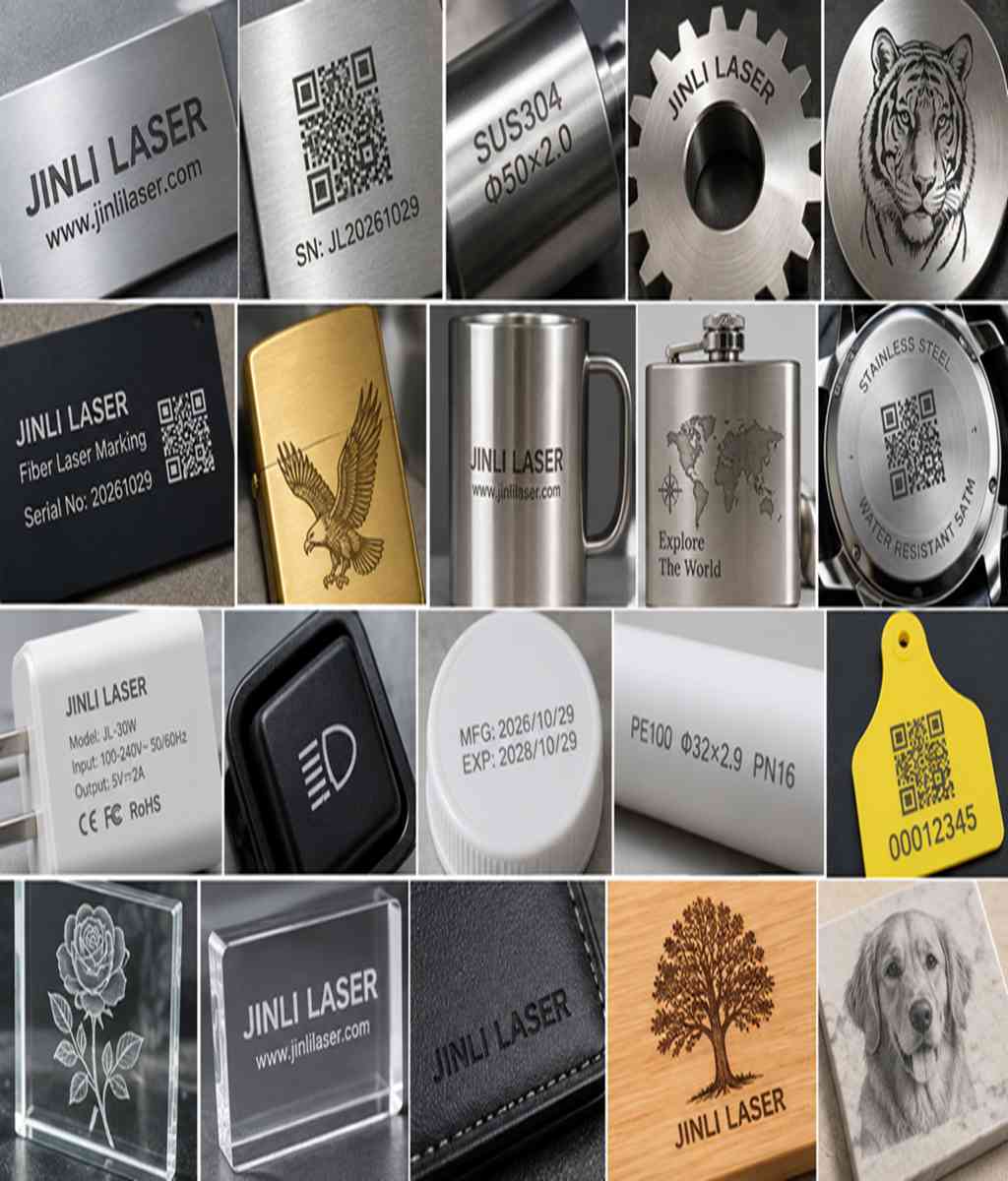
Compare the main marking technologies. Actual material compatibility, quality and throughput depend on the application and should be confirmed by testing.
A common solution for marking stainless steel, carbon steel, aluminum and other suitable metals. Selected plastics may also be marked depending on composition and additives.
Metal MarkingQR CodesSerial Numbers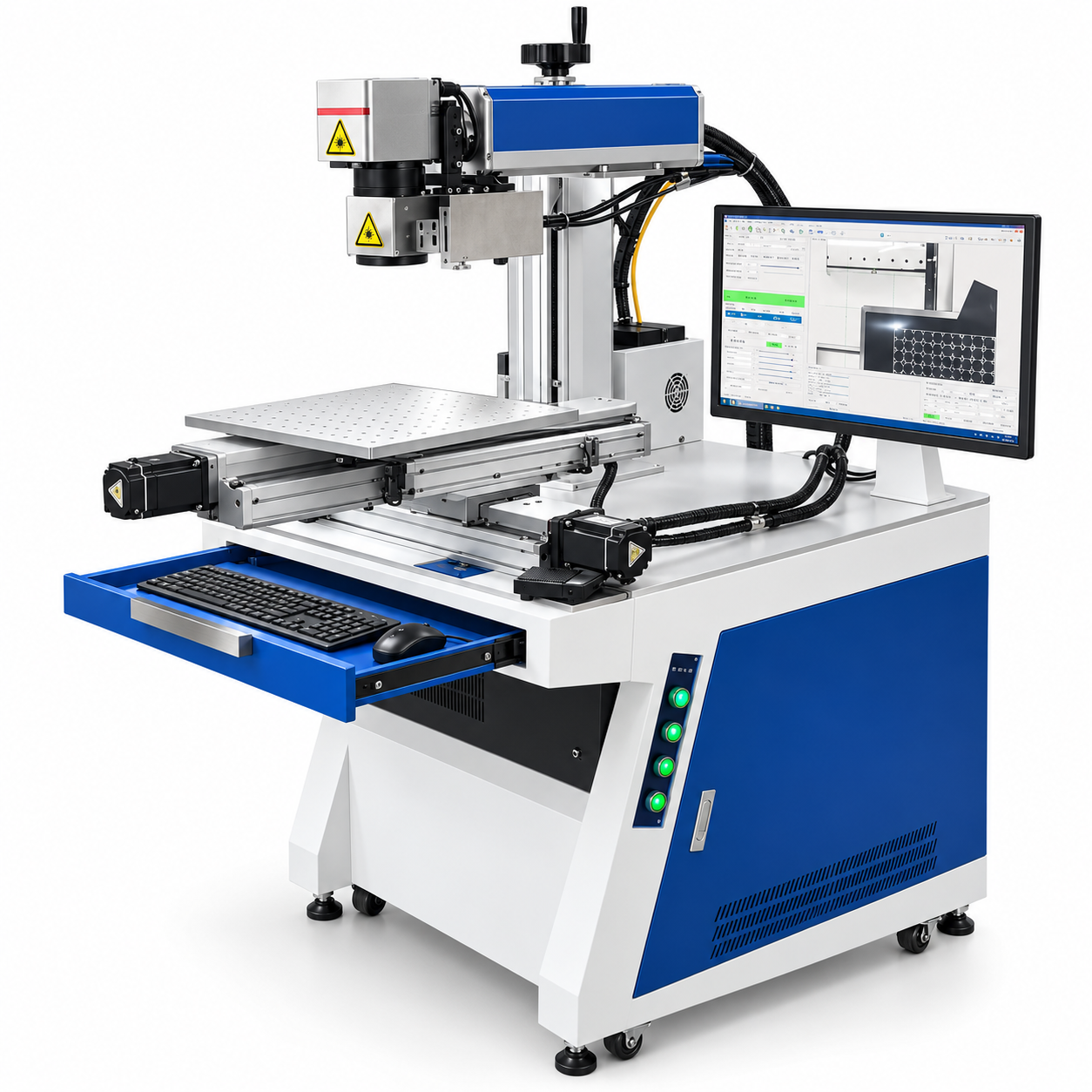
Uses a 355 nm laser for fine-detail marking on suitable plastics and selected sensitive materials, with relatively low thermal impact in many applications.
Plastic MarkingFine Details355 nm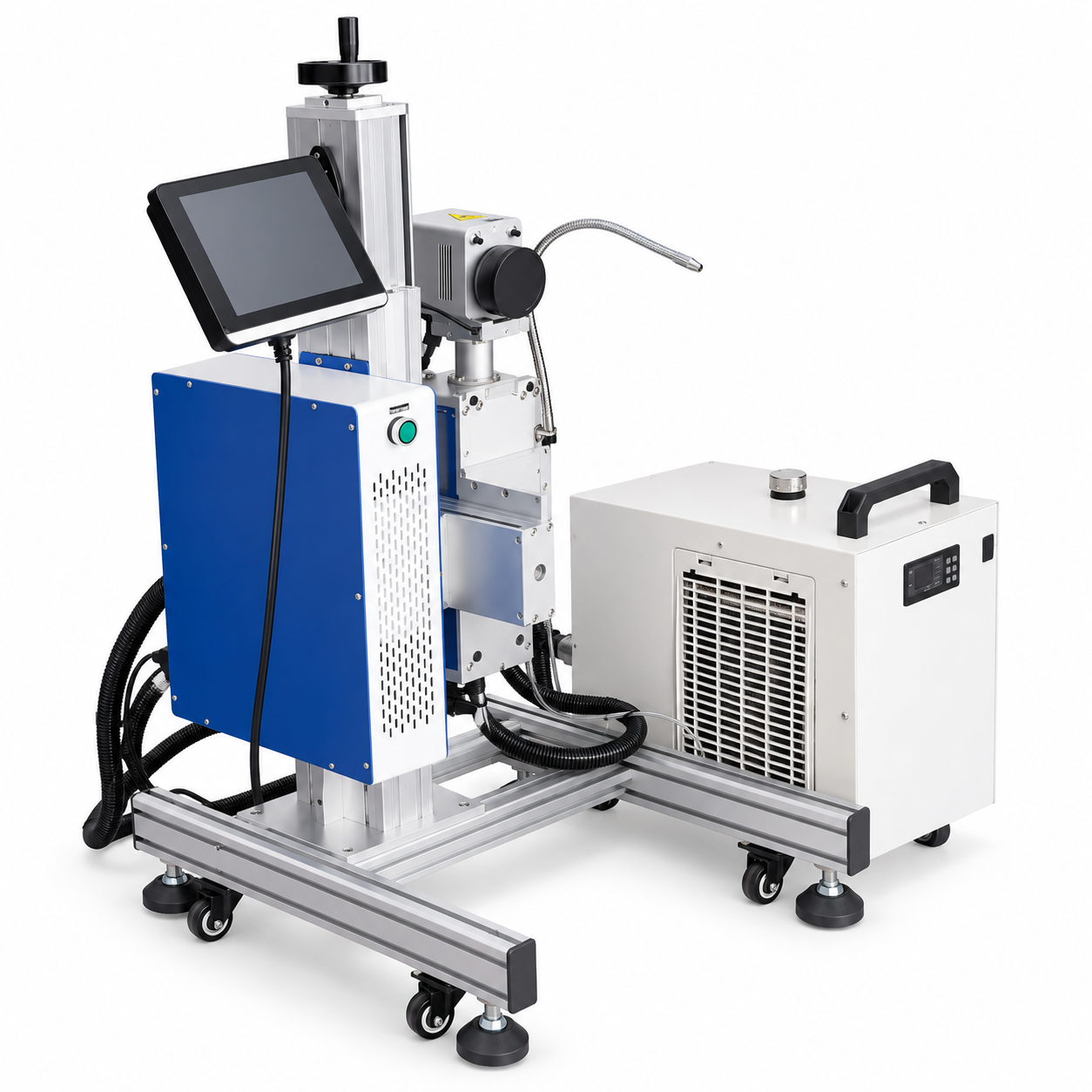
Suitable for many non-metallic materials, such as paper, wood, leather and certain plastics, subject to material compatibility and safe processing.
Non-MetallicPackagingOrganic Materials| Feature | Fiber Laser | UV Laser | CO2 Laser |
|---|---|---|---|
| Typical wavelength | ~1064 nm | 355 nm | ~10.6 µm |
| Typical applications | Metals, some plastics | Selected plastics, fine marking | Many organic/non-metallic materials |
| Typical mark types | Codes, logos, text, some engraving | Fine text, codes, sensitive surfaces | Packaging, labels, non-metallic marking |
| Selection priority | Metal type, depth, contrast | Material sensitivity, detail, contrast | Material absorption, finish, safety |
This is a general technology guide, not a guaranteed specification for a particular machine or material.
Part numbers, serial codes and logos on compatible stainless steel, aluminum and other metals.
Fine identification marks on selected plastic housings, buttons and molded parts.
Branding and identification for selected tools, fittings and metal accessories.
Component identification and small codes where material and process suitability allow.
Traceability and identification for compatible automotive parts.
Logos and product information on suitable packaging and decorative materials.
Marking results depend on more than laser power. We recommend evaluating your samples and the required process before selecting a configuration.
Laser source type and rated power
Marking field size and lens configuration
Desktop, enclosed or integrated workstation
Rotary attachment for suitable cylindrical parts
Software, control and marking file requirements
Fume extraction, guarding and operator safety
For a meaningful recommendation, share the material, marking content, size, desired contrast or depth, production quantity and sample photos.
For plastic marking, a higher-power fiber laser is not automatically the better choice. The material and mark requirements should determine the laser technology.
REQUEST A MARKING TESTProvide sample photos, material and marking content.
Discuss mark quality, contrast, depth and throughput.
Review laser type, power and workstation options.
Confirm configuration, lead time and destination.
Send your sample photo, marking requirements and expected quantity. We can help review the appropriate marking technology and configuration.
Fiber lasers are commonly used for metals, while UV lasers are often chosen for selected plastics and fine-detail marking. The best choice depends on the specific material and required result.
Some machines can mark certain metals and plastics, but there is no universal setting for every material. Sample testing is recommended.
No. Speed depends on the material, mark type, depth, contrast, lens and settings. More power can help in some applications but does not guarantee faster or better marking.
Yes, appropriate laser marking systems can produce QR codes, serial numbers, logos and other identifiers on compatible materials.
Please provide the material, marking content, size, desired contrast or depth, production quantity, preferred machine type and destination country.
Tell us about your marking application and we will discuss the suitable laser type and machine configuration.
Email
[email protected]
WhatsApp
+86 135 8482 3993
Website
www.jinlilaser.com
Submit your inquiry directly to our website. Please provide accurate contact information.