Plastic Components
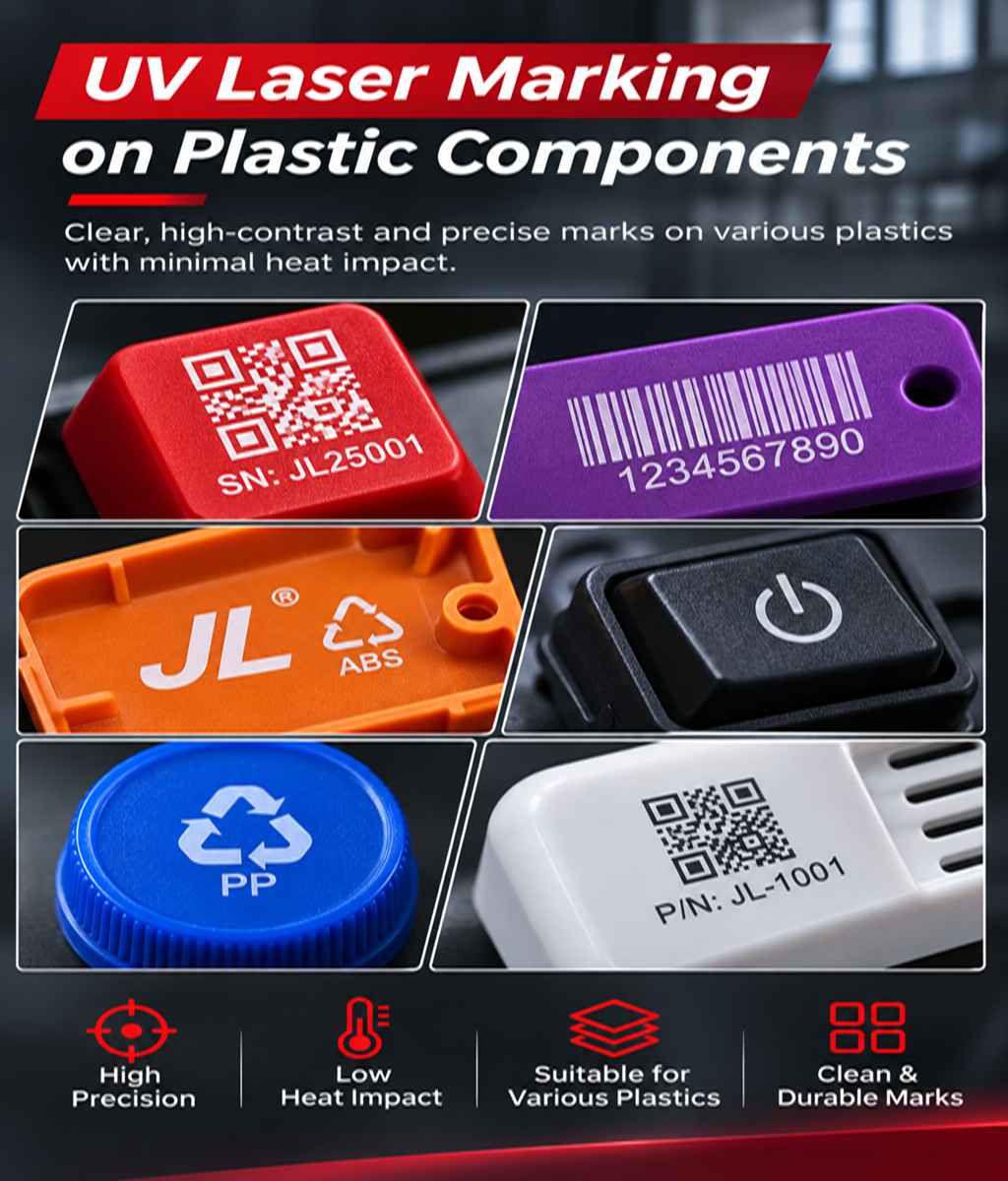
Fine identification marks on compatible engineering plastics and molded parts, subject to material testing.
PlasticsSerial Numbers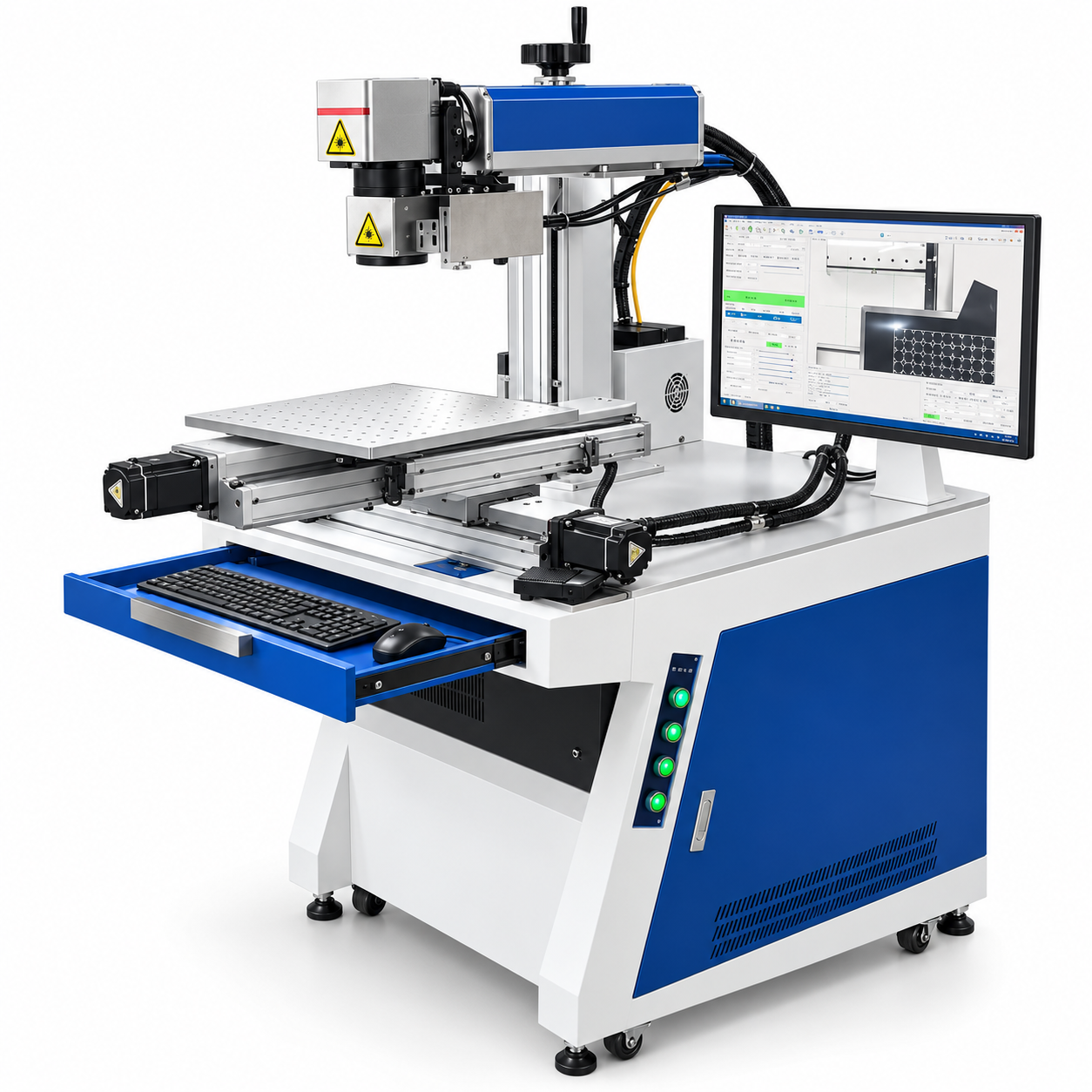
Explore UV laser marking for suitable plastics, glass, coated surfaces and selected metal applications. Jinli Laser helps manufacturers evaluate marking quality, material compatibility and configuration requirements for their parts.
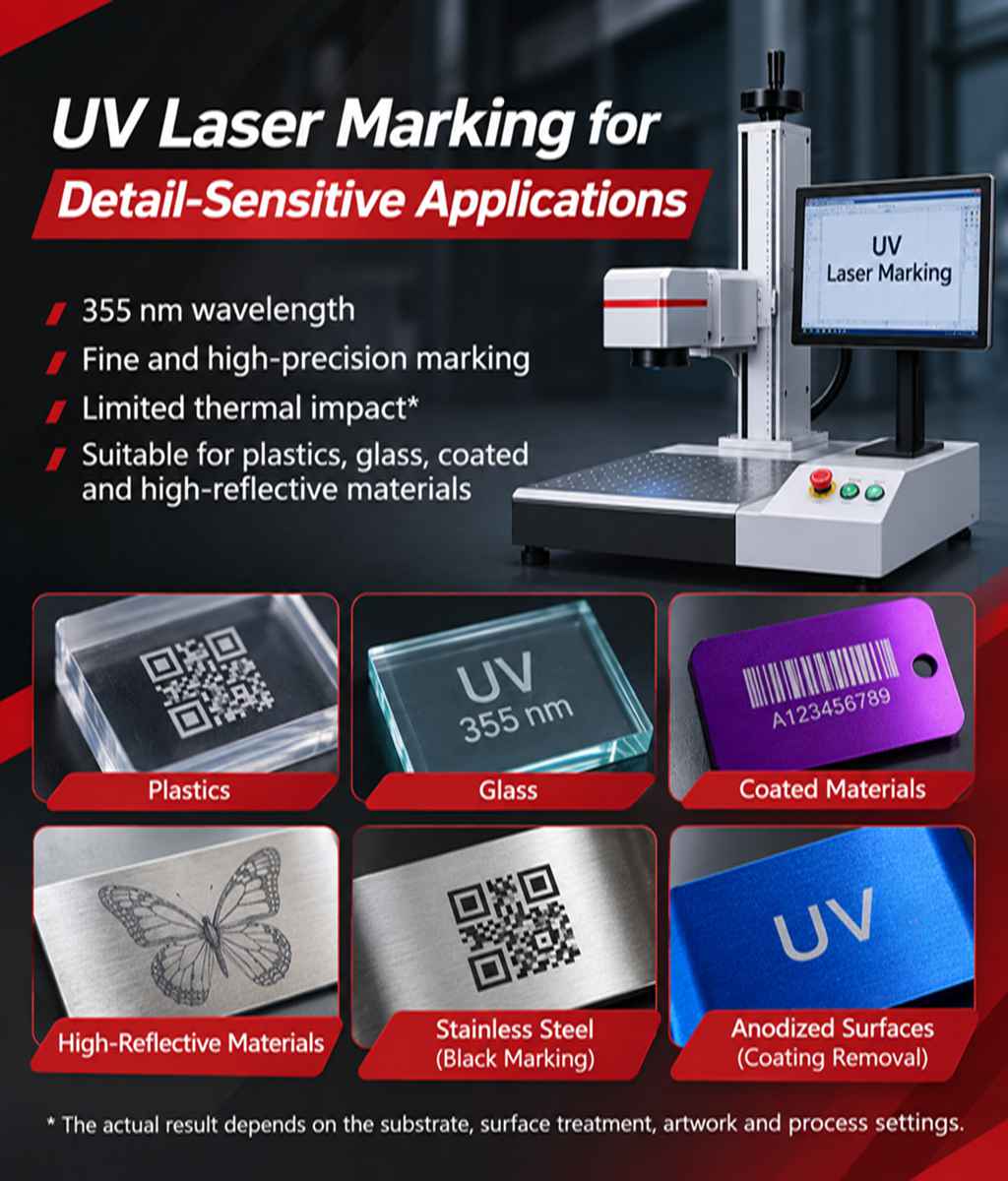
UV laser markers commonly use a 355 nm wavelength. For suitable materials, the shorter wavelength can support fine marking with limited thermal impact compared with some infrared laser processes. The actual result depends on the substrate, surface treatment, artwork and process settings.
Fine text, logos, symbols and 2D codes on suitable materials
Options for plastics and selected heat-sensitive components
Marking trials to evaluate contrast, readability and surface quality
Configuration discussion based on workpiece size and production needs
Material formulations and surface finishes vary. Always validate marking results on the actual production material before confirming the process.
Fine identification marks on compatible engineering plastics and molded parts, subject to material testing.
PlasticsSerial Numbers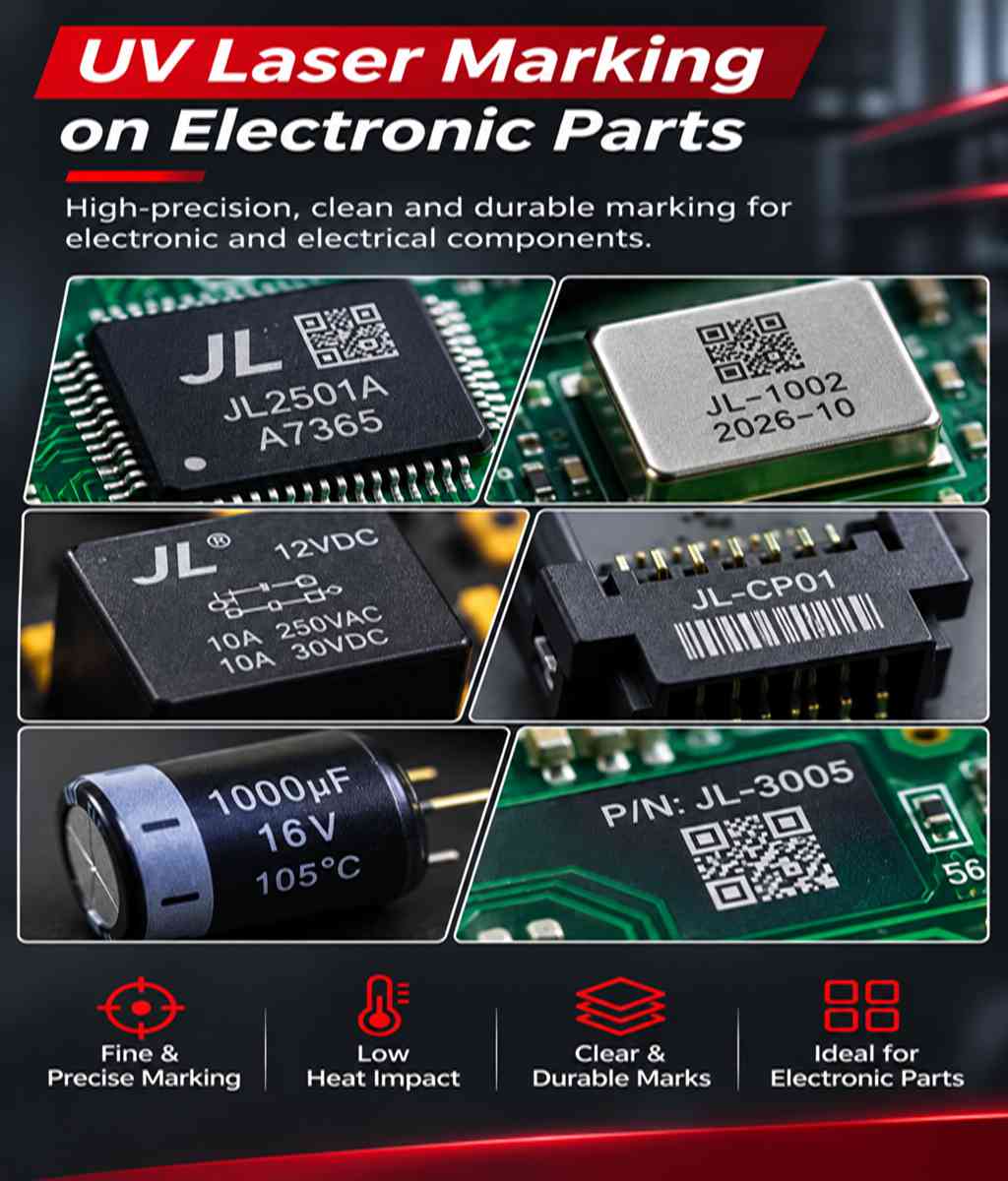
Small text, traceability codes and symbols on suitable electronic housings or components.
ElectronicsTraceability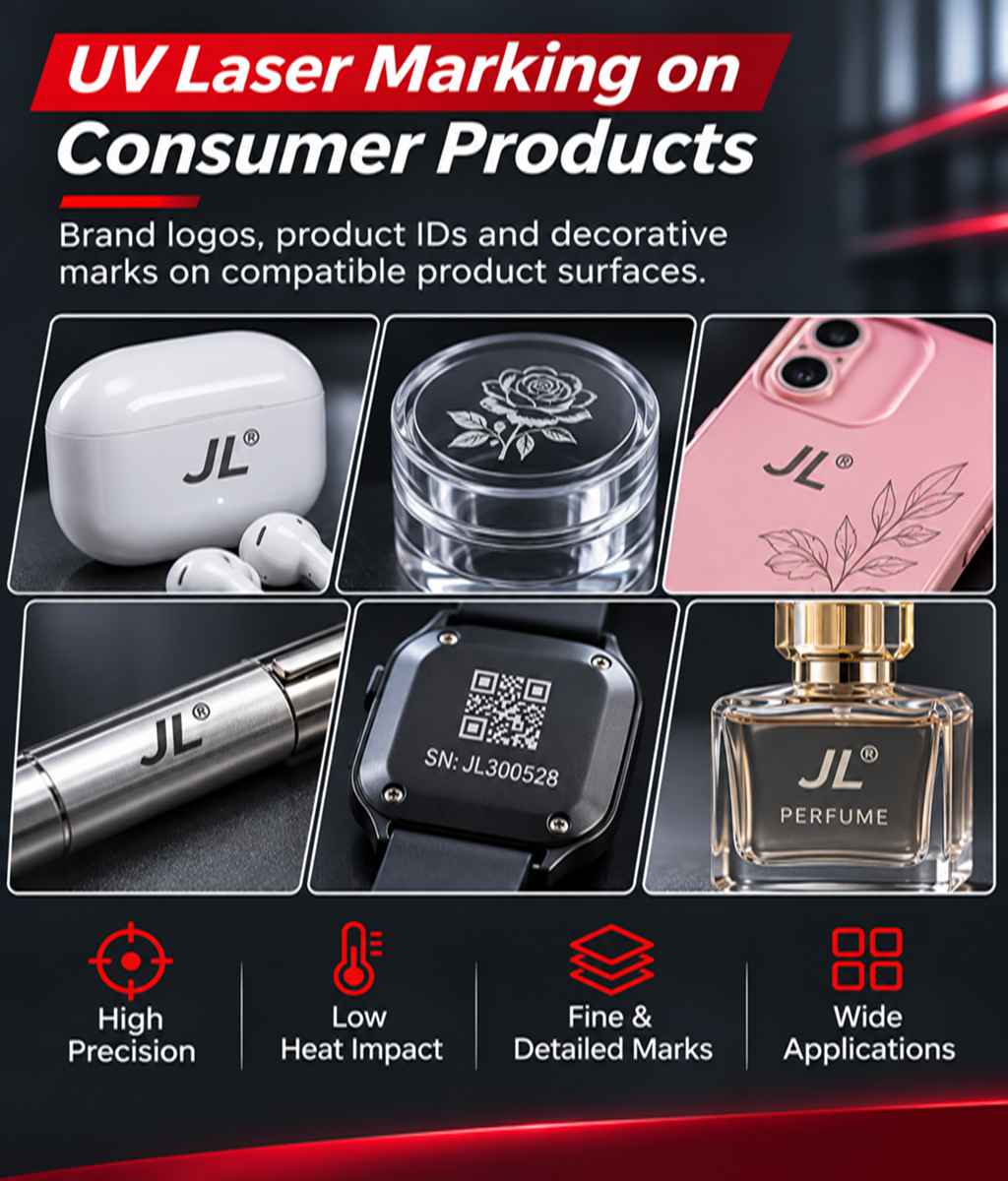
Brand logos, product IDs and decorative marks on compatible product surfaces.
LogosProduct IDs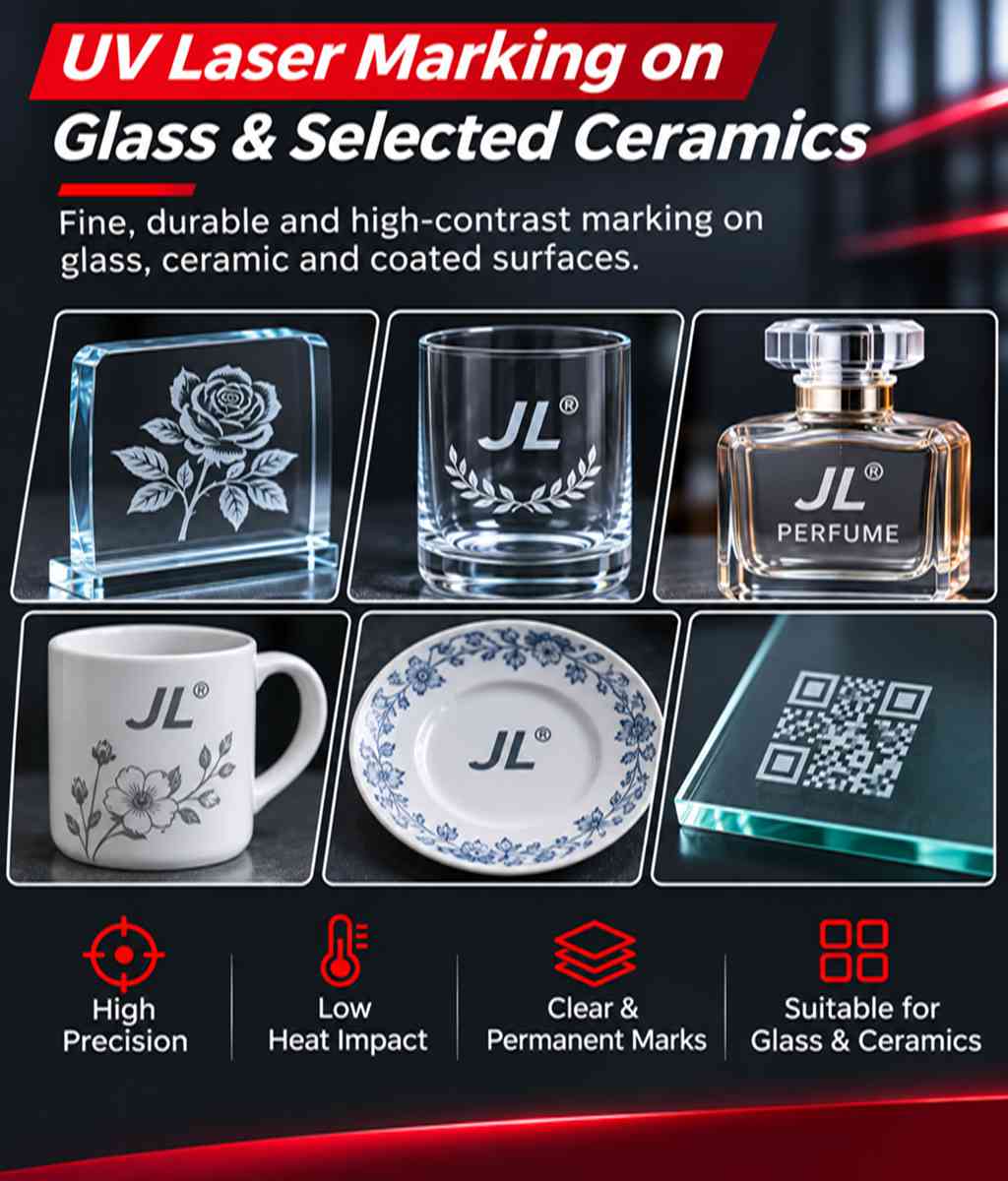
Potential fine-marking applications on suitable glass or ceramic products after testing for contrast and surface integrity.
GlassCeramics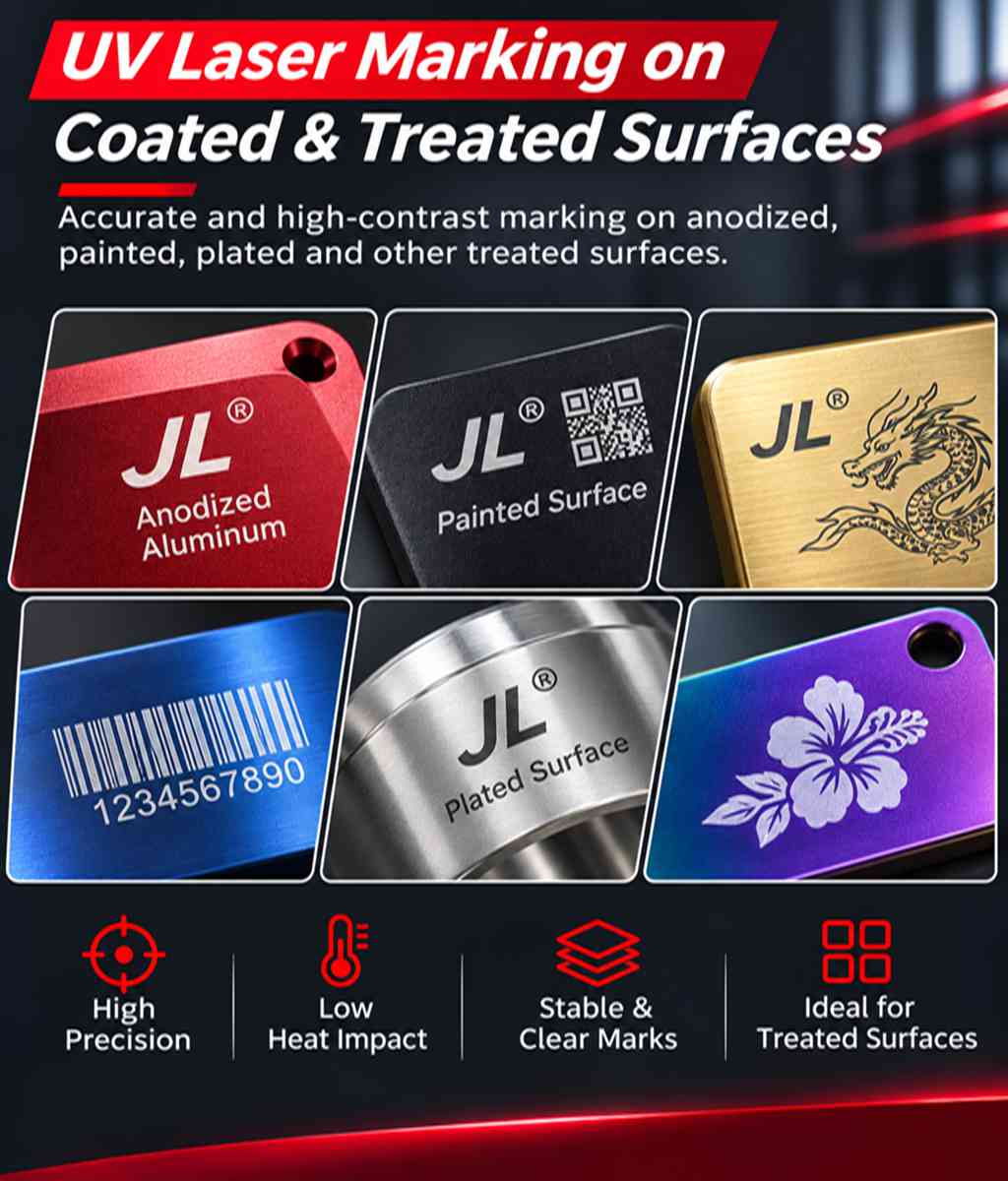
Marking or selective surface-layer processing on compatible coated or treated materials.
CoatingsSurface Treatment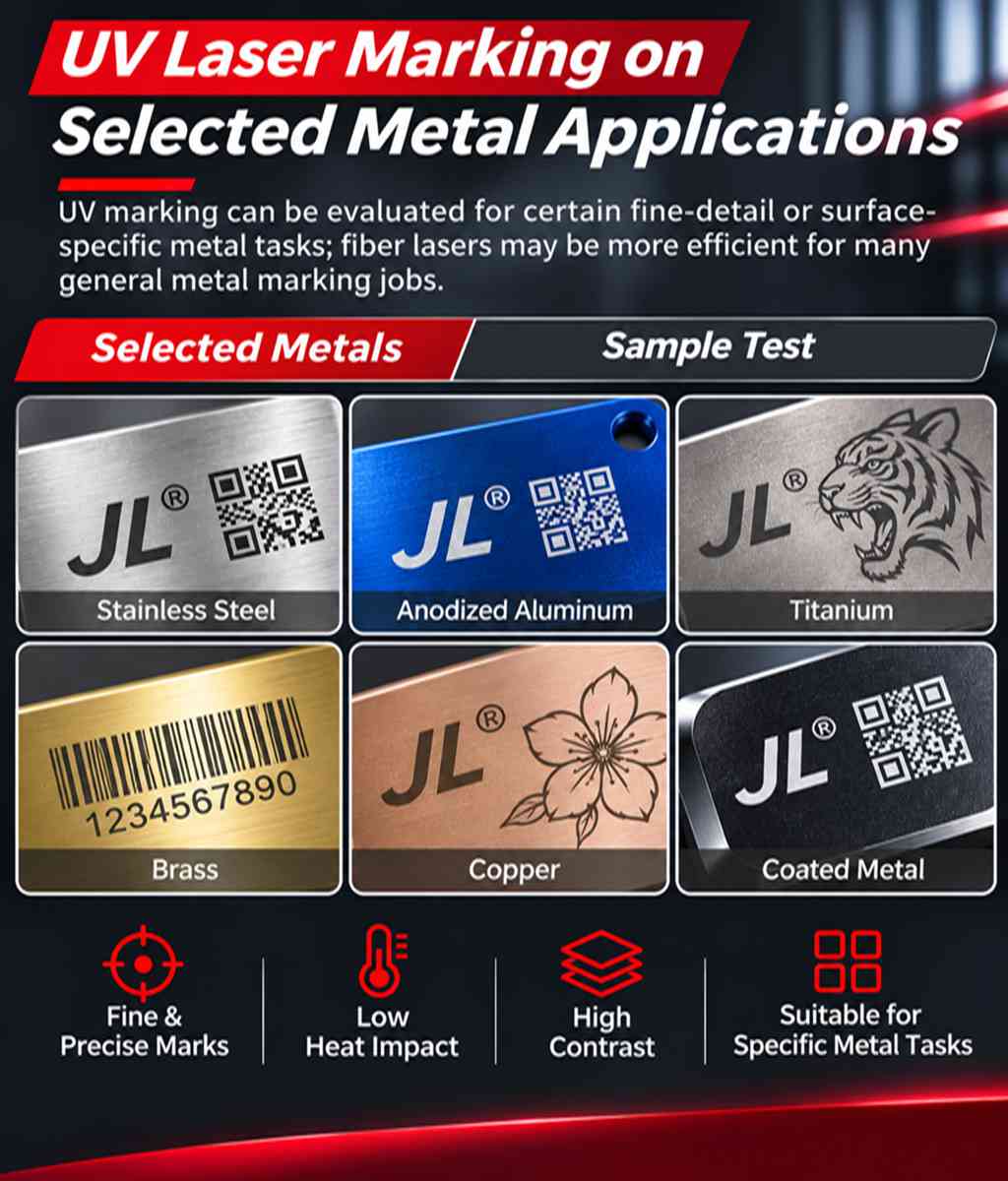
UV marking can be evaluated for certain fine-detail or surface-specific metal tasks; fiber lasers may be more efficient for many general metal marking jobs.
Selected MetalsSample TestThe best choice depends on the material, required appearance, marking depth and production throughput.
| Consideration | UV Laser | Fiber Laser |
|---|---|---|
| Common wavelength | 355 nm | Typically around 1064 nm |
| Typical strengths | Fine marking on suitable plastics and heat-sensitive materials | General metal marking, engraving and many industrial identification tasks |
| Metal marking | Useful for selected fine-detail or surface-specific applications | Often preferred for general bare-metal marking and deeper engraving |
| Selection basis | Substrate response, contrast and thermal sensitivity | Metal type, required depth, speed and production volume |
This is general guidance, not a guarantee of results. Test the actual material and artwork before selecting a system.
Can support small characters, detailed graphics and compact codes on compatible materials.
May reduce unwanted heat effects for selected materials compared with some other laser processes.
Suitable artwork may include logos, serial numbers, batch codes and 2D codes.
Sample tests help verify contrast, readability and material compatibility.
Mark product identification and tracking information where the material supports a durable mark.
Discuss work area, fixtures, enclosure and integration needs with the supplier.

A successful UV marking setup depends on the exact material formulation and finish. Send sample details to discuss a suitable test and machine configuration.
Material name or grade
Part dimensions and surface finish
Marking content, size and location
Required contrast, readability and durability
Expected quantity and cycle time
Tell us what you need to mark, on which material and with what quality requirements. Jinli Laser can discuss application testing and the next steps.
A UV laser marker commonly uses a 355 nm laser source for fine marking on compatible materials. The exact marking effect depends on the material and settings.
Many plastics are candidates for UV marking, but results vary by polymer, additives, color and surface finish. Test the actual material to confirm contrast and quality.
UV lasers can be suitable for selected metal marking tasks, especially where fine detail or a particular surface effect is needed. Fiber lasers are often more efficient for general bare-metal marking and deeper engraving.
No process should be assumed damage-free for every material. Validate the settings on samples and inspect the substrate for unwanted surface changes.
Please provide the material, part photos, marking content, required mark size, production quantity and destination country.
Discuss your material and marking requirements with Suzhou Jinli Laser.
Email
[email protected]
WhatsApp
+86 135 8482 3993
Website
www.jinlilaser.com